


What Homeowners Say About Our Organic Drain Cleaners

melody veinot
Technician arrived on time, and was professional and knowledgeable. He was here about 4 hours doing a thorough inspection and replacing of a valve and some other issues. Clearly explained the quote and pricing and was happy to answer all questions about the work being done.
★★★★★
Five-Stars • Google
J Howg
Kale is always very helpful and knowledgeable, no matter what the task. I appreciate the extra effort he puts in and how he takes the time to explain the various approaches available.
★★★★★
Five-Stars • Google
Matthew Otto
We had a leaky ceiling bathroom fan and called The Gentlemen Pros to take a look. Matthew and Andrew both showed up with a smile and explained what they needed to do. They found the source of the leak and were able to repair it. Included with this service call, they also inspected the plumbing and heating for the house. Professional and courteous, I recommend using The Gentlemen Pros.
★★★★★
Five-Stars • Google
Red Deer Maintenance & Inspections Services
Need Help?
(587) 797-7820Get a consultation
Gentler Drain Maintenance
Help reduce recurring drain buildup in your Red Deer home with bacteria-based drain maintenance and professional plumbing guidance.
Organic Drain Cleaners
Not every drain problem needs to start with a harsh chemical cleaner. In many Red Deer homes, recurring clogs are caused by buildup that develops slowly over time rather than one sudden blockage. Fat, oil, grease, soap scum, hair, and everyday organic waste can collect inside drains and sewer lines until water flow becomes restricted.
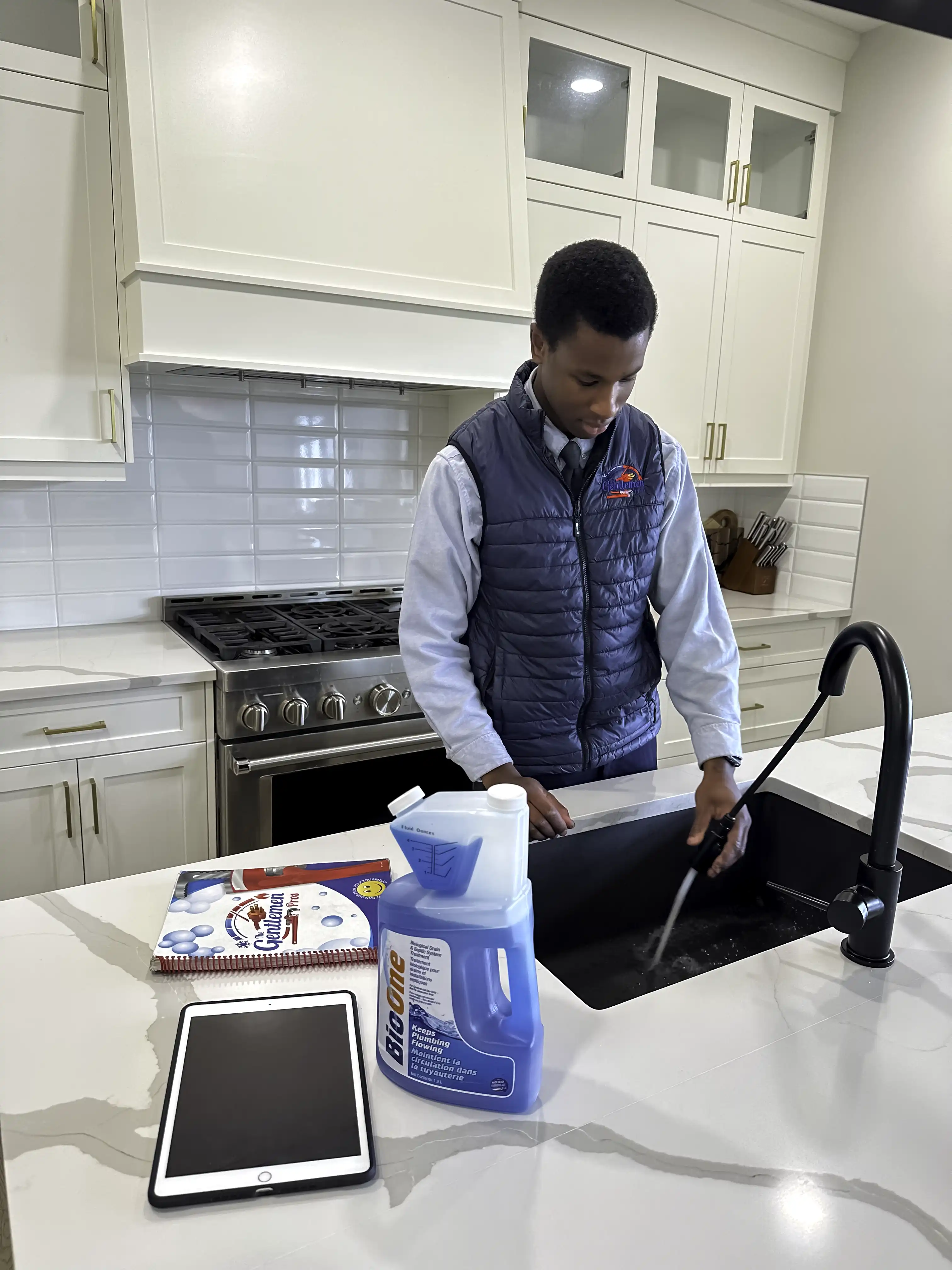
Organic drain cleaners are often used as part of a longer-term drain maintenance strategy. Rather than trying to force an immediate chemical reaction inside the pipe, bacteria-based products are designed to help break down organic residue more naturally over time. Our Red Deer plumbers can help homeowners understand when this kind of drain maintenance makes sense and when a clog needs professional clearing instead.
What an Organic Drain Cleaner Does
Bacteria-based drain products are intended to introduce helpful microbes into the drain system. These microbes feed on organic buildup that commonly collects inside household plumbing lines. Over time, they can help reduce the residue that contributes to recurring clogs and slow drainage.
This type of product is often compared to probiotics for your drains. The goal is to support a healthier balance inside the plumbing system so waste has less opportunity to collect and harden inside the pipe.
What Commonly Builds Up in Drains
Most household drains are exposed to organic matter every day. Even careful homeowners can end up with buildup because some materials naturally enter the plumbing system during everyday use.
- Fat, oil, and grease can cool and harden inside the drain line.
- Soap scum can form when soap mixes with Red Deer's hard water minerals.
- Hair can catch and hold residue in sinks, tubs, and showers.
- Food particles and kitchen waste can collect in drain piping over time.
- Organic residue can accumulate gradually even when no major clog is obvious yet.
Once these materials begin sticking to the inside of the pipe, they can trap additional debris and create a larger restriction over time.
Why Drains Keep Clogging
In many cases, recurring drain clogs happen because there is already a layer of buildup coating the pipe. Even if you are careful about what you flush or wash down the drain, that buildup can continue catching new debris until the line narrows enough to create repeated slow drainage and stoppages.
That is why some homes seem to have the same sink, shower, or kitchen drain clogging again and again. The immediate blockage may be removed, but the conditions that caused it are still present inside the line.
FOG Is One of the Biggest Culprits
Fat, oil, and grease, often shortened to FOG, are among the most common contributors to drain clogs. These materials are deceptive because they usually go down the drain in liquid form. Once they move through cooler piping, they begin to congeal and stick to the interior surfaces of the drain.
As that greasy layer grows, it can catch soap residue, food bits, hair, and other debris. Over time, the pipe becomes more restricted and much more likely to clog.
Soap Scum and Hard Water in Red Deer
Red Deer homes commonly deal with hard water, which means dissolved minerals such as calcium and magnesium are present in the water supply. When those minerals interact with soap products, they can leave a film or residue inside drains and on plumbing surfaces.
That soap scum may seem harmless at first, but it can create a sticky surface inside the pipe that makes it easier for other materials to collect. Combined with hair or grease, it can become part of a larger drain blockage.
What Should and Should Not Go Down the Drain
One of the best ways to prevent clogs is to control what enters the plumbing system in the first place. Even the best drain maintenance product cannot make up for flushing or draining the wrong materials on a regular basis.
What Should Be Flushed
- Toilet paper
- Pee
- Poop
What Should Stay Out of Drains
- Tampons and hygiene products
- Flushable wipes
- Paper towels and napkins
- Grease, fats, and oils
- Hair and dental floss
- Food scraps and heavy residue
Items that do not break down properly can combine with grease and other buildup, creating larger and more stubborn clogs inside the drain or sewer line.
Why Harsh Chemical Drain Cleaners Are Not Ideal
Many chemical drain cleaners are marketed as quick solutions, but they are not always the best option for the plumbing system. These products are designed to create a chemical reaction that attacks the clog, but they may not fully remove the cause of the buildup and can be hard on certain pipes depending on the condition of the system.
They can also interfere with the beneficial bacterial activity that supports healthier drain lines over time. For homeowners already using or planning to use bacteria-based drain maintenance, repeated chemical use can work against that approach.
How Organic Drain Maintenance Fits In
Organic drain cleaners are generally best viewed as a maintenance tool rather than an instant emergency solution. If a drain is completely blocked, physically clearing the clog may still be necessary. However, for ongoing maintenance and prevention, bacteria-based treatments can help reduce the buildup that leads to recurring issues.
Over time, regular use may help support cleaner drain walls, reduce odours related to organic residue, and improve the overall condition of problem lines that are prone to buildup.
When a Plumber Is Still Needed
If a drain is already badly clogged, backing up, or affecting multiple fixtures, professional drain cleaning may still be required. Snaking, augering, or inspecting the line may be the right first step to restore flow. Once the line is open again, an organic maintenance approach may be a helpful part of preventing the issue from returning as quickly.
Our Red Deer plumbers can help homeowners understand whether the drain needs clearing, whether there may be a deeper problem in the line, and whether a bacteria-based maintenance product makes sense for the situation.
How to Maintain Healthier Drains
Keeping drains in better condition usually comes down to a combination of good habits and regular maintenance.
- Keep grease and oil out of kitchen drains.
- Use strainers in sinks, tubs, and showers.
- Avoid flushing wipes, tampons, floss, or paper products.
- Address slow drains before they become full blockages.
- Consider bacteria-based maintenance for drains prone to organic buildup.
For many households, the best results come from combining smart drain habits with the right maintenance plan rather than waiting until the line is completely blocked.
Organic Drain Maintenance Services
We help Red Deer homeowners with organic drain maintenance, recurring clog prevention, drain assessments, professional drain clearing, and guidance on bacteria-based solutions for sinks, tubs, showers, and sewer lines.
An organic drain cleaner is typically a bacteria-based drain maintenance product designed to help break down organic buildup such as grease, soap residue, and waste inside the drain over time.
Yes. Used regularly, a bacteria-based drain product may help reduce the organic buildup that contributes to recurring clogs, especially in drains affected by grease, soap scum, and similar residue.
No. Chemical drain cleaners are designed to create a fast chemical reaction, while organic drain cleaners are generally used as a gentler maintenance approach that works over time by supporting beneficial bacterial activity.
Usually not. If a drain is fully blocked, professional clearing may still be needed first. Organic drain cleaners are generally better suited to maintenance and prevention than emergency clog removal.
Recurring clogs often happen because there is already buildup coating the inside of the pipe. Grease, soap scum, hair, and other residue can continue catching new debris until the drain is cleaned and maintained properly.
Benefits of working with us

Gentler Drain Maintenance
Bacteria-based drain care can support healthier plumbing lines without relying on harsh chemical products for everyday maintenance.

Recurring Clog Prevention
Regular organic drain maintenance may help reduce the buildup that often leads to repeated sink, shower, and sewer line clogs.

Helpful for Red Deer Hard Water
Organic drain maintenance can be part of a smart strategy for homes dealing with soap scum and mineral-related residue in drain lines.
Professional Guidance
We help homeowners understand when organic maintenance is enough and when a drain needs professional cleaning or inspection first.