

What Homeowners Say About Our Sewer Backups

Patrick Mitchell
Performed an annual electrical inspection for my condo. Professional, polite, and great service. Communicated to me the areas to watch for and items to think about replacing. Didn't push repairs, just informed me.
★★★★★
Five-Stars • Google
Patty Bergey
Ted was amazing! He walked me through everything that needed to be done. He also showed me things that may need some attention in the future. I appreciate that he took the time to explain everything. I am a first-time homeowner and need some direction. I will definitely be calling them again when im need plumbing and electrical work done
★★★★★
Five-Stars • Google
Kerry Chow
Richard provided professional advice on options to replace our hot water heater. The quality of the installation was excellent and the service was awesome!!. He also left us with some value added tips for some other items we inquired about. I recommended him to a colleague who was shopping for an A/C installation. We were provided with a variety of options and felt no pressure choosing what we felt was best for us. This the second time we’ve utilized this company and our experience has been very positive each time. We highly recommend the service we were provided with.
★★★★★
Five-Stars • Google
Red Deer Emergency & Repair Services Services
Need Help?
(587) 797-7820Get a consultation
Emergency Sewer Backup Help
Red Deer plumbers who respond to sewer backups, identify the cause, and recommend the right repair or prevention solution.
Sewer Backups
A sewer backup is a plumbing emergency. When the main sewer line cannot carry wastewater out to the municipal system, sewage can return into the home through the lowest drains. In many Red Deer homes, that means a basement floor drain, basement shower, or lower tub is the first place homeowners notice the problem.
Our Red Deer plumbers respond to sewer backup problems, investigate the main sewer line, and help homeowners move from emergency relief to a long-term solution. Whether the cause is a blockage, root intrusion, aging piping, or a damaged underground sewer line, the goal is not only to restore flow but to help prevent the same disruption from happening again.
How Sewer Backups Usually Start
Most sewer backups do not happen without a reason. In many cases, there is already a developing problem in the main sewer line that has been building for some time. The backup is simply the point when the restriction becomes severe enough that wastewater can no longer pass through properly.
Three of the most common causes are flushing the wrong things, damage or age-related problems in the sewer pipe, and tree roots growing into the line. Sometimes more than one of these issues is happening at the same time.
Warning Signs Before a Full Backup
Some homeowners do not get much warning before a sewer backup, but others notice early symptoms first. Paying attention to those signs can make a major difference in how much damage and cleanup you end up facing.
- Slow drains on the lowest level of the home
- Recurring toilet or shower backups in the basement
- Multiple fixtures draining poorly at the same time
- Gurgling sounds from toilets or floor drains
- Bad sewer smells near basement drains
If these warning signs are showing up together, it is a good idea to have the main sewer line inspected before wastewater starts coming back into the house.
Cause 1: Flushing the Wrong Things
One of the most preventable causes of sewer backups is putting the wrong materials into the plumbing system. Toilets and drains are not designed to carry every type of waste, and some materials create major problems once they move farther down the sewer line.
Toilet paper is designed to break down in water, but many other products are not. Items such as tampons, wipes, hygiene products, paper towels, and other non-flushable materials can swell, hold their shape, and catch on rough spots or obstructions inside the pipe.
Kitchen waste also plays a role. Oil and grease may look harmless in liquid form, but once they cool they coat the inside of the pipe and trap other debris. Food waste, especially pasta, grains, peels, grounds, shells, and fibrous scraps, can also contribute to sewer blockages even if a garburator is present.
What Should Never Go Down the Drain or Toilet
- Flushable wipes
- Tampons and hygiene products
- Paper towels and tissues
- Grease, fats, and oils
- Coffee grounds
- Pasta, rice, and grains
- Eggshells, bones, and pits
- Fibrous or stringy food scraps
Even when one item does not create an immediate blockage, repeated habits can gradually build a clog that eventually causes a full sewer backup.
Cause 2: Damaged or Aging Sewer Pipes
Underground sewer lines can wear out over time. Cracks, failing joints, misalignment, sagging sections, and collapses can all interfere with proper drainage. Because the pipe is buried below ground, these problems are usually invisible until a backup or repeated clog begins happening inside the home.
Older pipe materials are especially vulnerable. Clay, cast iron, concrete, transite, and Orangeburg sewer lines are all more prone to deterioration, root intrusion, and structural failure than modern plastic piping. Even in newer systems, a poor installation or shifting soil can still create slope problems or joint issues.
Common Sewer Line Failures
- Cracked sewer pipes that leak wastewater and weaken surrounding soil
- Pipe bellies where a sag in the line causes wastewater and solids to collect
- Misaligned joints that catch debris and restrict flow
- Collapsed sections that stop the line from draining properly
- Worn joints that allow leakage and root intrusion
These conditions often begin as a partial restriction, then worsen until the line cannot keep up and sewage starts backing up into the home.
Cause 3: Tree Roots in the Sewer Line
Tree roots are one of the most common causes of main sewer line blockages, especially in older Red Deer homes. Roots search for moisture and nutrients, and even a tiny crack or leaking joint can be enough to let them enter the pipe. Once inside, they grow and expand.
As roots get larger, they create a root mass that catches toilet paper, food waste, and other debris moving through the line. Over time, that root mass becomes more obstructive and can also force pipe sections out of alignment or worsen existing damage.
Root intrusion is a strong sign that the sewer line has a structural weakness somewhere. Clearing the roots may restore flow temporarily, but the roots usually come back unless the damaged section of pipe is repaired or replaced.
How We Diagnose Sewer Backup Problems
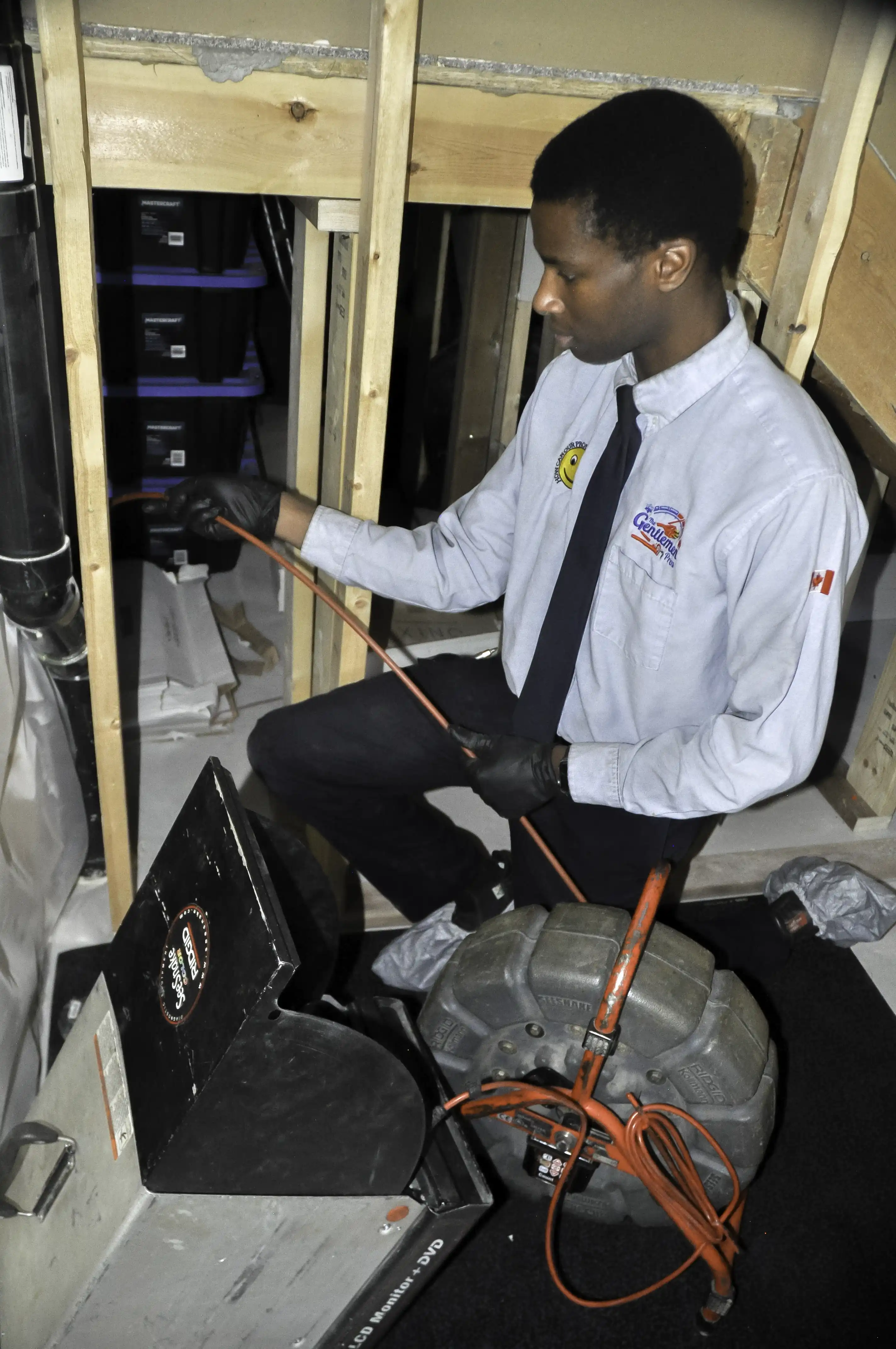
One of the best tools for understanding a sewer backup is a camera inspection of the main sewer line. A camera inspection allows us to see the inside of the pipe and identify the actual cause of the problem. This could be roots, a clog, cracking, a belly, joint failure, or a collapse.
Without an inspection, it is much harder to know whether you are dealing with a one-time blockage or an underground sewer line problem that needs a more permanent fix. Camera inspections are especially valuable after a backup because they help shape the right next step.
What Happens After the Backup Is Cleared
Once the immediate sewage backup issue is addressed, the next step is deciding whether the line needs maintenance, repair, or replacement. In some cases, a clog can be removed and flow restored. In others, the backup was only a symptom of a deeper structural problem underground.
Possible solutions may include augering, hydro jetting, root treatment, pipe lining, trenchless replacement, partial replacement, or full sewer replacement depending on what the line inspection shows.
How to Help Prevent Another Sewer Backup
While not every sewer problem is preventable, homeowners can take steps to reduce the chances of another backup happening.
- Only flush toilet paper, pee, and poop
- Keep wipes, tampons, floss, and paper products out of toilets
- Never pour grease or oil down drains
- Limit what goes through a garburator
- Schedule sewer camera inspections if you have an older home or past backup history
- Deal with recurring slow drains before they turn into an emergency
For many Red Deer homeowners, prevention starts with understanding the condition of the main sewer line before a full backup occurs.
Why Older Homes Need Extra Attention
Homes with older sewer materials are more likely to develop cracking, root intrusion, belly issues, failing joints, or collapse. If your home is several decades old and the sewer line has never been inspected, a proactive camera inspection can be one of the smartest plumbing checks you can do.
Finding a sewer problem early can provide more repair options, better timing for budgeting, and a much better chance of avoiding sewage entering the home.
Red Deer Sewer Backup Help
If wastewater is backing up into your home, you need prompt plumbing help and a clear diagnosis of why it happened. Our Red Deer plumbers can help clear the immediate issue, inspect the sewer line, and explain what needs to be done next.
From emergency sewer backup response to long-term planning for root intrusion or damaged sewer pipes, we help homeowners move from panic to a practical solution.
Sewer Backup Services
We help Red Deer homeowners with sewer backups, main drain blockages, sewer camera inspections, root intrusion issues, damaged sewer line diagnosis, and long-term repair or prevention planning.
Sewer backups are commonly caused by main line blockages, tree roots, damaged or aging sewer pipes, or materials that should never have been flushed or washed into the plumbing system.
Early warning signs often include slow drains on the lowest level of the home, gurgling toilets, bad smells, repeated drain issues, or water starting to back up into a basement floor drain, tub, or shower.
Yes. So-called flushable wipes do not break down like toilet paper and are a common cause of sewer and drain blockages in both homes and municipal sewer systems.
A camera inspection of the main sewer line is one of the best ways to determine whether the cause is roots, a clog, cracked piping, a belly, joint failure, or another sewer line issue.
Avoid flushing anything other than toilet paper and human waste, keep grease and food waste out of drains, and consider a camera inspection if your home is older or has had past sewer issues.
Benefits of working with us

Fast Sewer Backup Help
We help respond to sewer backups quickly so Red Deer homeowners can get answers and start moving toward a clean, working drain system again.

Camera Inspection Diagnosis
A sewer camera inspection helps identify whether the real cause is roots, a clog, pipe damage, or another underground sewer line problem.

Long-Term Prevention Guidance
We explain what likely caused the backup and what steps can help reduce the risk of it happening again in the future.
Repair Planning Options
From maintenance and root clearing to larger sewer line repairs, we help homeowners understand the practical next steps after a backup.