Early Fall is the ideal time to find issues before the winter weather and snow arrives. Our goal is always to help you address small maintenance needs today, before they turn into costly problems later.
1. Is Your Main Drain Worth Checking Before the Ground Freezes?
Most homes are just fine here. But if your home is over 50 years old, the odds of tree roots having already worked their way into your main drain go up — and the only way to confirm the condition of your sewer line is a camera inspection.
The main drain, also known as the main sewer line, is a single pipe that collects all the wastewater from your home and carries it out to the city sewer main system.
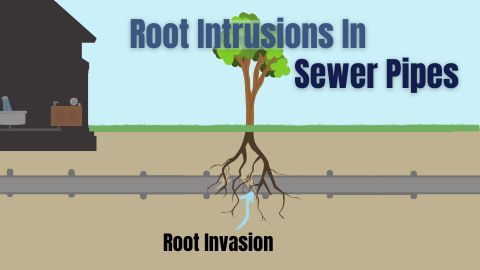
Most homes built in Red Deer after 1970 have plastic drain pipes, which makes them less susceptible to cracks and breaks in the main drain. The risk still exists, often due to pipe misalignments and pipe bellies, which can lead to clogs that cause sewer backups. Even minor pipe cracks allow tree root infestations that obstruct the flow and cause major sewer backups.
Too often, we're called out to deal with a homeowner's worst nightmare: a sewer backup. This happens when wastewater gets blocked in the mainline and forces its way backward through a basement drain. It's disgusting, and it can ruin a finished basement in minutes.
Usually, homeowners don't know there's a problem until the sewer backs up. There's no need to worry if your home is newer — but if it's an older property, it's worth scheduling a
camera inspection
now, while the ground is still workable. Once it freezes, any repair becomes a much bigger, more expensive job.
2. Can Your Eavestroughs Handle Whatever Falls Next — Rain or Snow?
It doesn't take long for summer storms to wash dirt and debris into your eavestroughs, and now that fall is here, there's more than ever. An early snowfall is just as likely as rain in this part of Alberta, and clogged eavestroughs make it that much easier for melting snow to back up toward your foundation.
We recommend inspecting your gutters and downspouts and making sure they're free of debris.
Things to check for
- Sagging sections
- Leaking seams
- Loose connections
- Blocked downspouts
- Downspouts directing water toward the foundation
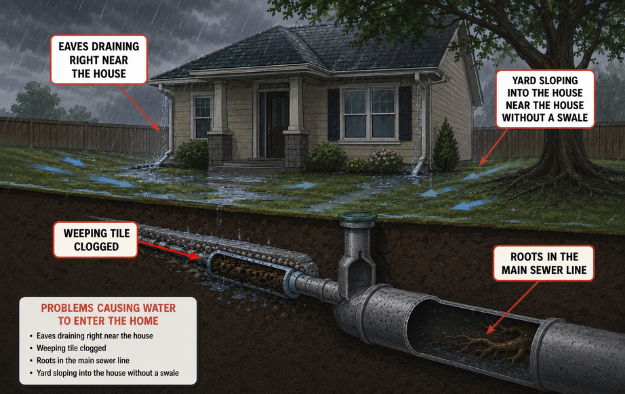
A rainstorm, or right after a snowmelt, is a great time to observe whether your water is flowing properly.
Proper drainage means water is directed away from the foundation. Check for loose-fitting or detached downspouts, since these cause leaks and can lead to pooling near the foundation.
3. Will Your Sump Pump Keep Up With Rain — or an Early Snowmelt?
Sump pumps can remain unused for months, but when a heavy rain or a sudden influx of water comes, it's crucial that it works. In Red Deer, that moment can arrive early — snow before winter officially starts, followed by a quick melt, isn't unusual.
Fall has arrived, and it's a good time to test your sump pump to make sure it's functioning properly. Check that the discharge pipe is clear and that water is being directed away from your property's foundation.
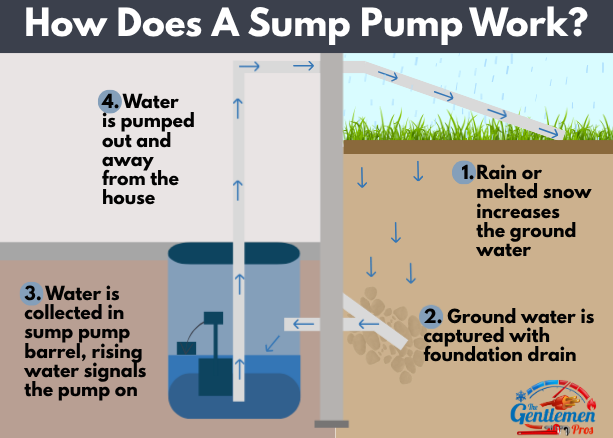
Make sure any secondary sump pumps or emergency battery backup systems get tested along with the primary unit.
You don't want to be caught unprepared during a rainstorm or a fast snowmelt with a sump pump that isn't working.
4. Is Your Furnace Ready Before the First Cold Snap?
It's a good time to start thinking about your furnace before you need it, since it's probably been out of mind through the warm summer months.
- Change the batteries on your thermostat
- Change the furnace filter
- Clean around the furnace, ensuring proper airflow
- Check the furnace humidifier for hard water buildup
Our schedule fills up fast with emergency calls right after an extreme weather event. Did you know your furnace works harder than any other system in your home? That's exactly why servicing it early in the season can help you stay warm all winter.
Give it the regular care and attention it needs. Ask yourself:
Questions to ask about your furnace
- When did you last have your furnace professionally serviced?
- Does your furnace make any unusual noises?
- Have you noticed inconsistent heating within your home?
- Is your furnace cycling on and off more often than usual?
- Does your furnace filter need to be changed?
- How old is your furnace — is it approaching the end of its life cycle?
5. Your AC's Done for the Season — Has It Had Its End-of-Year Once-Over?
As AC season wraps up, a clean furnace filter is still essential — since the same one serves both systems. Now's the right time for a bit of end-of-season care, not less important, just different, so everything starts up smoothly again next spring.
Central air conditioning relies on the same furnace fan and ventilation ducts as your heating system to circulate cool air through the home. (A mini-split AC unit is the exception — it operates independently of your furnace.)
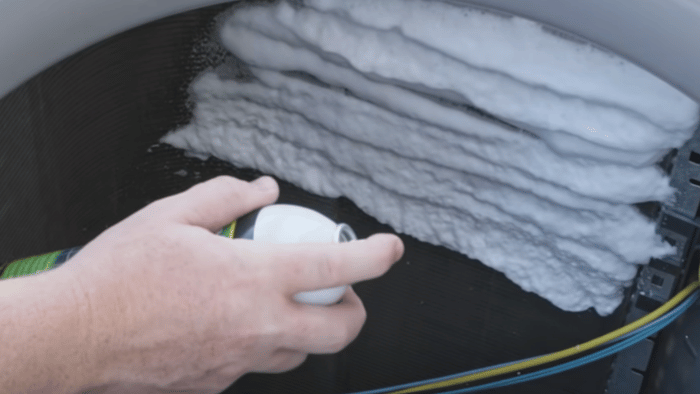
When the filter is dirty and airflow is restricted, your air conditioner has to work twice as hard. Swap the filter now as part of your fall routine, and give the outdoor condenser a quick clear of leaves and debris before you cover it or leave it for winter.
A monthly filter replacement, checked regularly, is one of the easiest things you can do — it improves your furnace's efficiency and the quality of your air.
6. Is Your Home's Humidity Set for the Season Ahead?
Indoor humidity matters more than most homeowners realize.
Red Deer winters are very dry, so it's important to add moisture back into the air. Moisture helps maintain stable temperatures, which means your furnace doesn't have to work as hard.
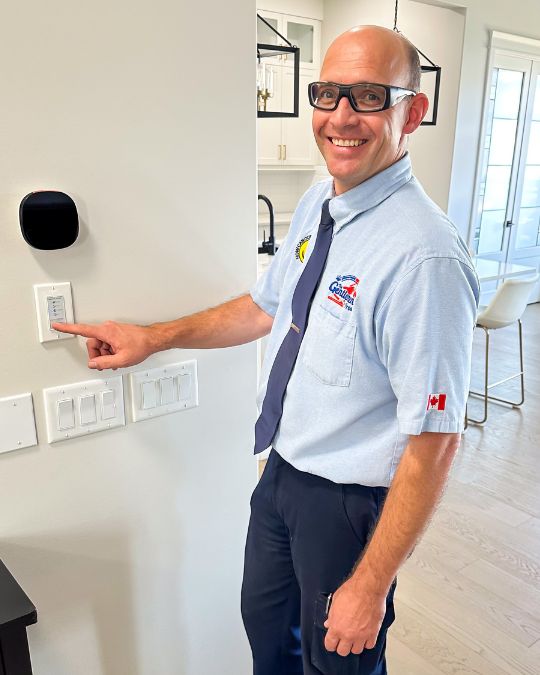
In summer and spring, there's more humidity in the air already, so it can be set lower. Now that we're into fall, it's time to adjust it higher again.
Too much indoor humidity in colder weather can lead to window condensation and other moisture problems. Air that's too dry can make your home uncomfortable and even cause gaps in your hardwood flooring.
| Season |
Outdoor Temperature |
Recommended Humidity (RH) |
Why It Matters |
| Winter |
0°C to -10°C |
35–40% |
Comfortable warmth without window condensation |
| Winter |
-10°C to -20°C |
30–35% |
Reduces frost and moisture buildup |
| Winter |
Below -20°C |
25–30% |
Prevents window damage and hidden moisture issues |
| Summer |
Any typical summer temp |
40–50% |
Improves comfort, reduces mold, helps A/C efficiency |
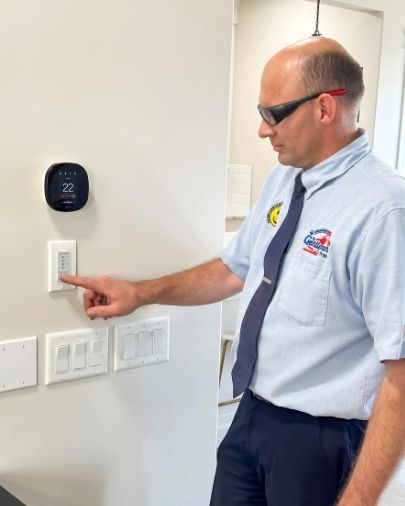
Pro Tip
If you notice condensation on your windows in winter, your indoor humidity is likely set too high. A furnace humidifier with a humidistat can help you dial it in automatically.
7. Could You Have a Plumbing Leak You Haven't Noticed Yet?
It's always a good time to check for hidden plumbing leaks in your home. We recommend routine checks underneath sinks, around toilets, around appliances, and around any exposed plumbing.
Things to check for
- Drips
- Water stains
- Corrosion
- Damp cabinets
- Musty smells
- Slow drains
- Toilets that seem to run frequently
Small leaks can go undetected for a while and cause a lot of damage. Signs include a stain, a smell, or gradual deterioration around a plumbing joint — finding these now, before they become big leaks, will save you money.
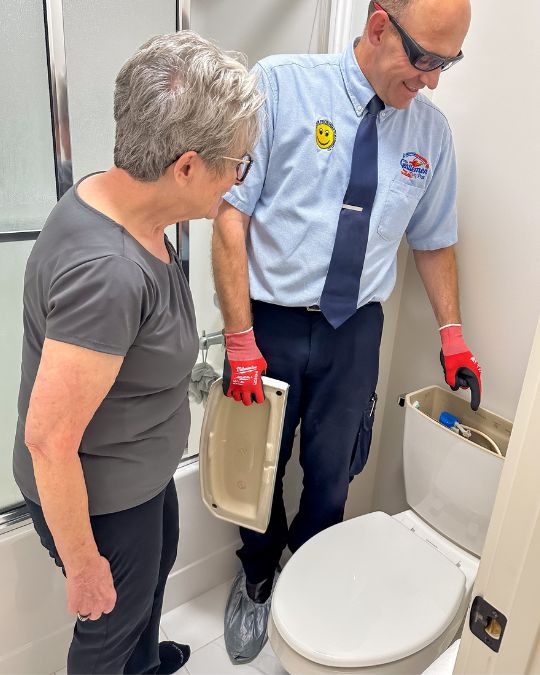
Toilets often have slow, continuous leaks that aren't always apparent — water keeps refilling from the tank into the bowl, over and over, wasting gallons of water every day.
Pro Tip
It's easy to check: drop a couple of food colouring drops into the tank and see if the colour shows up in the bowl. If it does, you have a slow leak, and we recommend replacing the toilet. (There are small fixes that can be done, but in most cases they're only temporary — it's better to invest in a new toilet to avoid problems with the old one down the road.)
8. Have You Winterized Your Outdoor Plumbing Yet?
The beginning of fall, before the frost comes, is a great time to think about your outdoor water lines.
Disconnect all garden hoses and inspect exterior faucets for leaks.
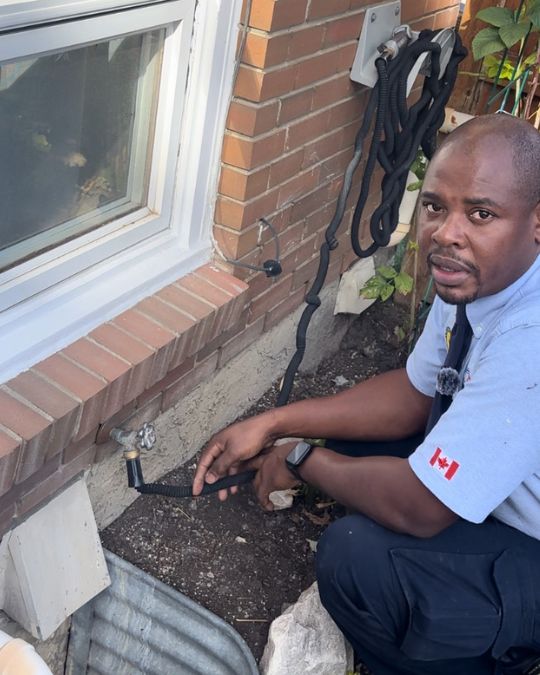
As temperatures start dropping below freezing, make sure all outdoor plumbing has been properly shut off.
Pro Tip
We highly encourage our clients to install frost-free outdoor faucets — they protect your outdoor plumbing and help prevent freezing in the line.
9. Do You Know Where to Shut Off Your Water in an Emergency?
If you don't know where your main water shutoff is, you're not alone — a significant number of homeowners have no idea.
Would you know where to shut off all the water in your house if a pipe burst suddenly?
Make sure you know where it is, and make sure everyone in your household does too.
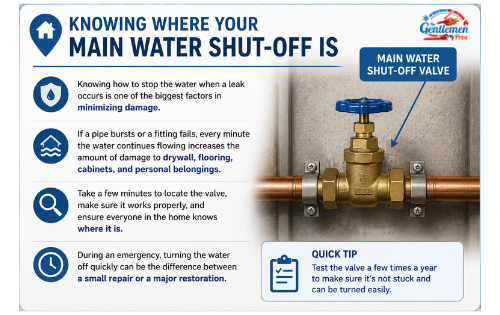
A mature home may have an older-style valve, called a gate valve. These often stick, or can break down, over time.
If you have a gate valve, we recommend replacing it with a ball valve. Ball valves have internal components that are less prone to mineral buildup, making them less likely to stick or break, and they only require a 90-degree turn to shut off.
What Is Your Home Trying to Tell You?
Summer is often the best time to spot problems that are harder to notice the rest of the year.
Think back over the last few months: was one room always hotter than the others? Did your AC struggle to keep your home cool? Have you noticed a running toilet?
Worth checking outdoors too: did you notice water pooling near your foundation after a big storm? Are your downspouts loose or disconnected from your eavestroughs?
Spot it early, and fix it now — before it becomes a winter emergency.