Your furnace filter does much more than just catch dust. It plays a critical role in protecting airflow, improving heating efficiency, and helping maintain healthy indoor air quality in your home.
Every time your furnace runs, air is pulled through the return ducts and passes through the furnace filter before entering the system. The filter traps dust, pet hair, lint, pollen and other airborne particles so they do not circulate throughout your home or build up inside the furnace.
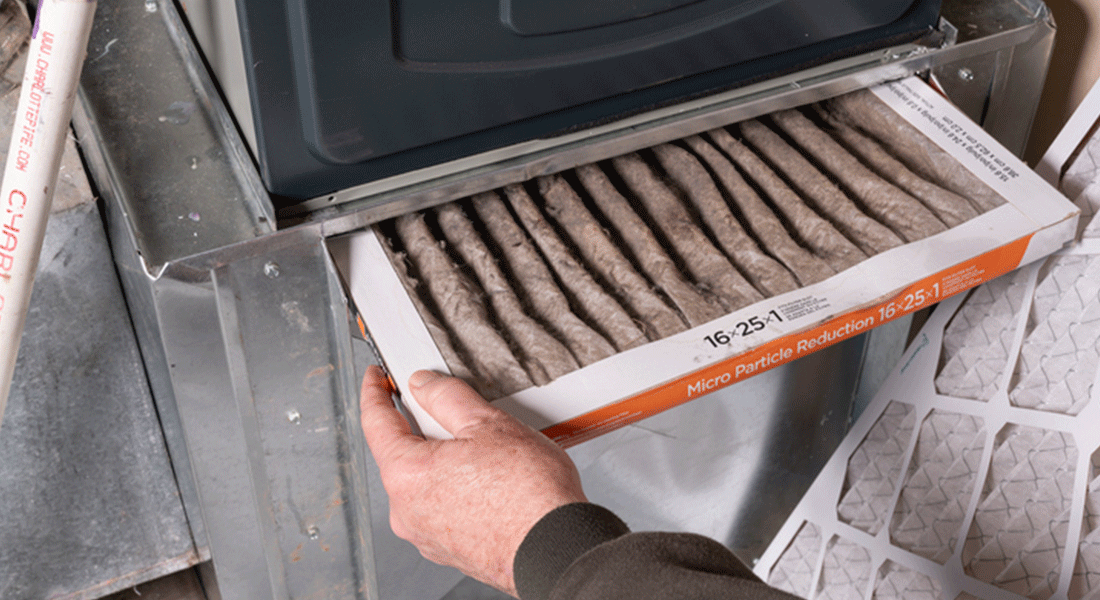
When the filter is clean, air flows easily through the system and your furnace can operate the way it was designed. But when the filter becomes clogged with debris, airflow becomes restricted. That forces your furnace to work harder to push air through the system, which can reduce efficiency and increase wear on important components.
Why replacing your furnace filter matters
A dirty furnace filter can lead to several common heating problems. One of the most noticeable is reduced airflow from your vents. When air cannot move freely through the filter, rooms may take longer to warm up and the furnace may run longer cycles to reach the thermostat setting.
Over time, restricted airflow can also cause parts of the heating system to work harder than necessary. Components such as the blower motor and heat exchanger depend on proper airflow to operate efficiently. When airflow is restricted, those parts can experience additional strain, which may shorten the life of the equipment.
Another important benefit of regular filter replacement is improved indoor air quality. Furnace filters help remove airborne particles that can contribute to allergies, dust buildup and poor indoor air conditions. A clean filter helps keep the air in your home fresher and healthier for everyone inside.
How often should you change your furnace filter?
The ideal replacement schedule depends on several factors including the type of filter you use, whether you have pets, the level of dust in the home, and how frequently your furnace runs.
Many homeowners benefit from checking their furnace filter once a month during the heating season. Even if the filter does not need to be replaced every month, checking it regularly ensures it never becomes excessively dirty.
Typical guidelines include:
- Standard 1-inch filters: replace every 1-3 months
- Homes with pets: check monthly and replace more frequently if needed
- High-efficiency or thicker filters: replace every 3-6 months depending on usage
- Homes with higher dust or allergy concerns: inspect filters more often
If the filter appears dark, clogged or covered in debris, it is time to replace it. Waiting too long between replacements can reduce system performance and increase energy costs.
Choosing the right furnace filter
Not all furnace filters are the same. Filters are available in different thicknesses and efficiency ratings, often measured by something called a MERV rating. Higher-rated filters capture smaller particles, but they also restrict airflow more if the furnace is not designed for them.
Using the wrong type of filter can sometimes create airflow issues. That is why it is important to choose a filter that is compatible with your heating system and the needs of your home.
If you are unsure which filter size or type your furnace requires, our technicians can help you select the right option and ensure it is installed correctly.
Professional furnace maintenance helps too
While replacing the filter regularly is one of the simplest things homeowners can do to care for their heating system, routine professional maintenance is also important. During a furnace inspection, technicians check airflow, clean internal components and ensure the system is operating safely and efficiently.
Regular maintenance helps identify small issues before they become larger problems and keeps your furnace running reliably throughout the heating season.
If you would like help choosing the right furnace filter, replacing it properly, or scheduling a heating system inspection, our team is always happy to help.