Gas Furnaces vs Electric Furnaces in Alberta
If you are building a new home or replacing an existing furnace, it is important to understand the differences between a natural gas furnace and an electric furnace. Both systems can heat your home, but the installation costs, operating costs, and performance can vary significantly.
In Alberta, where winters are long and temperatures can drop quickly, these differences become especially important when choosing the right heating system for your home.
Heating Your Home Faster
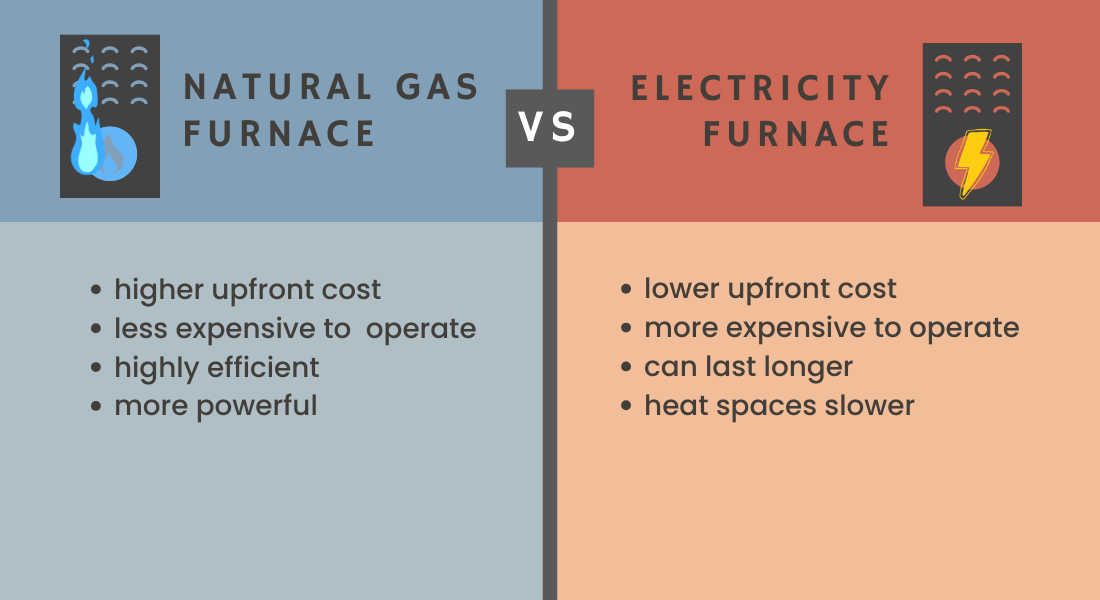
When it comes to heating speed, natural gas furnaces have a clear advantage. Gas furnaces generate heat quickly and can raise the temperature of your home faster than most electric furnace systems.
This rapid heating performance is one of the reasons natural gas furnaces are so common in Alberta. In fact, the vast majority of homes in the province rely on natural gas for heating.
Installation Cost
Electric furnaces typically have a lower upfront installation cost. They do not require a gas connection, flue pipe, or chimney venting system, which simplifies the installation process.
Natural gas furnaces require additional components such as a gas line connection and venting system, which can increase the initial installation cost.
Electric furnaces may also require less routine maintenance and can sometimes have a longer service life. However, the cost to operate an electric furnace is generally much higher.
Monthly Heating Costs
In Alberta, natural gas is usually far less expensive than electricity for heating a home. While the installation cost of an electric furnace may be lower, the monthly operating cost can be dramatically higher.
For example, consider the following simplified comparison based on common assumptions.
Natural Gas Furnace Cost Example
Assumptions:
- High-efficiency gas furnace
- Furnace runs approximately 9 hours per day
- Heating season lasts about 9 months
- 90,000 BTU furnace uses approximately 0.094955027 GJ of energy per hour
- Estimated natural gas cost of about $5 per gigajoule
Based on those assumptions, the cost to heat a home with a natural gas furnace could be approximately $128 per month.
Additional charges on a natural gas bill may include:
- Delivery charges
- Administration charges
- Rate riders
- Fixed or variable utility charges
- Municipal fees
- Federal carbon tax
- Sales tax
Electric Furnace Cost Example
Assumptions:
- Furnace runs about 9 hours per day
- Heating season lasts approximately 9 months
- Energy consumption of roughly 18 kWh per hour
- Average electricity cost of about $0.15 per kWh
Using these assumptions, heating a home with an electric furnace could cost approximately $729 per month.
Additional charges on an electricity bill may include:
- Distribution charges
- Transmission charges
- Balancing pool allocation
- Rate riders
- Municipal fees
- Sales tax
Energy Price Factors
The actual cost of heating your home will depend on several factors, including:
- Outdoor temperatures
- Home insulation and energy efficiency
- Energy rates for electricity and natural gas
- Whether you have a fixed-rate energy contract
Energy prices can change over time, which means operating costs for both types of systems may vary.
Which Furnace Is Right for Your Home?
Both electric and natural gas furnaces have advantages depending on the home and installation environment. Electric furnaces are simpler to install and may work well in certain situations, but natural gas furnaces generally provide faster heating and significantly lower operating costs in Alberta.
If you are deciding which heating system is best for your home, a professional inspection and consultation can help determine the most efficient and cost-effective solution.
The Gentlemen Pros can help with professional furnace installation and heating services to ensure your home stays comfortable during Alberta’s cold winters.