Sewer Backups: Everything You Need to Know
Learn what causes sewer backups, how to spot the warning signs, the difference between a drain clog and a main sewer problem, and which repair options offer a real long-term fix.


Tree roots in sewer lines can lead to serious clogs and basement backups. Learn whether chemical root killers work, when they help, and why pipe repair is often the real long-term solution.

Summarize with
Sewer backups, clogs, and ongoing sewer problems are often caused by roots growing inside the main sewer line. Once roots get into a damaged pipe, they can trap debris, restrict wastewater flow, and eventually lead to a messy backup in your home.
A sewer backup happens when wastewater cannot pass through the main sewer line and starts coming back through the lowest drains in the house. In many Alberta homes, that means a basement floor drain, basement shower, tub, toilet, or cleanout becomes the point where sewage returns.
If you have not had a sewer backup, it is worth doing what you can to prevent one. A sewer camera inspection can help identify root intrusions, failing pipes, and developing blockages before they turn into a major emergency.
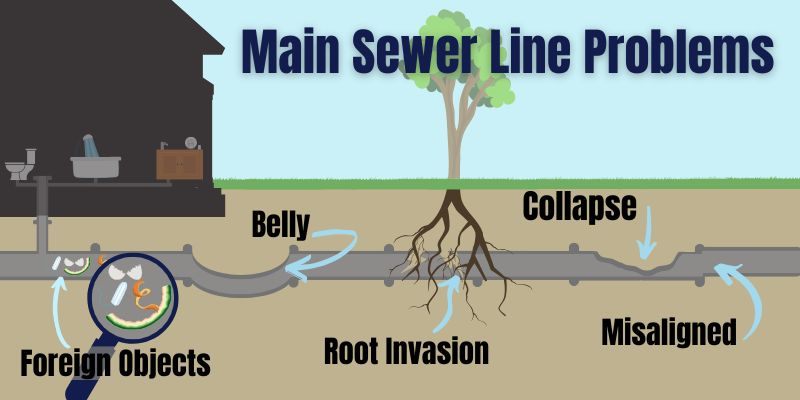
Roots usually invade sewer lines because the pipes are already compromised. Common causes include aging materials, rust, cracks, leaking joints, pipe misalignment, or sections of pipe that have started to sag or collapse.
Even a very small crack can allow a tiny root to enter the line. Once inside, roots have access to moisture, oxygen, and organic material. Over time, that small intrusion can grow into a root mass that catches waste and debris as wastewater flows through the pipe.
Eventually, the restriction gets worse until the line can no longer carry waste properly. That is when backups happen.
The most reliable long-term solution is to repair or replace the damaged sewer pipe. That addresses the reason the roots are able to enter in the first place.
Root removal on its own is only a temporary fix. It may restore flow for a while, but if the pipe is still cracked or leaking, the roots will usually come back.
If roots are already present, there are a few ways they may be managed in the short term:
Chemical root treatments can work as a short-term maintenance option, but they are not a permanent fix. They do not repair cracks, realign pipes, or prevent roots from returning forever.
That means they are best viewed as a temporary measure to help manage a known root problem until proper repair or replacement can be done.
Before choosing a chemical treatment, it helps to keep a few things in mind:
Foam root killers are generally considered the most effective type of chemical treatment because the foam is designed to coat more of the inside of the pipe. That gives it a better chance of reaching root intrusions around the full interior of the sewer line.
Foam treatments usually sit in the line for a period of time, which means the sewer often cannot be used during treatment.
Professional application can be helpful because:
Store-bought root killer products get mixed reviews. Some homeowners report positive results, while others find them ineffective or too slow to solve the problem.
One challenge is that by the time root growth becomes obvious, the blockage may already be too advanced for a simple off-the-shelf treatment to handle well.
Another issue is coverage. Dissolvable products may travel along the bottom of the pipe but may not treat the full interior surface the way a foam product can. In addition, the only reliable way to confirm whether the roots have actually been affected is with a camera inspection.
Some do-it-yourself root-killing methods are popular because they seem less expensive up front. But delaying needed repairs while relying on temporary DIY treatments can cost more over time, especially if a backup happens in the meantime.
Copper sulphate is sometimes mentioned as a sewer root treatment, but it has important drawbacks. It does not foam, so it may not reach all root growth inside the pipe. It can also raise environmental concerns, may be restricted in some areas, and is hazardous to handle.
It is not considered an ideal long-term approach.
Salt is another DIY method people talk about, but its effectiveness is questionable. It may not coat the full inside of the pipe, may not dissolve in the right place, and could contribute to further deterioration in certain older pipe materials.
For those reasons, it is not generally viewed as the best way to manage root intrusion in a sewer line.
If you are concerned about roots in your sewer line, a camera inspection is one of the most useful first steps. It can show whether there is root growth, where it is located, and whether the pipe also has cracking, sagging, or alignment issues.
That information helps determine whether the best next step is maintenance, root removal, repair, or full replacement.
Chemical root killers can sometimes help manage root growth in the short term, especially after the sewer line has already been cleared. But they do not solve the underlying pipe problem, and roots often return if the damaged pipe remains in place.
If you are dealing with recurring sewer issues or want to prevent a future backup, The Gentlemen Pros can help with a plumbing inspection and sewer camera evaluation. If you want added peace of mind year-round, you can also learn more about our membership options.
TRENDING NEWS
Learn what causes sewer backups, how to spot the warning signs, the difference between a drain clog and a main sewer problem, and which repair options offer a real long-term fix.




Plumbing, heating & electrical service
2026 The Gentlemen Pros